
Identifying Mud Tubes and Early Structural Signs of Desert Subterranean Termites
Learn how to spot mud shelter tubes, drywall pinholes, and early structural damage caused by desert subterranean termites in Avondale homes before major damage occurs.
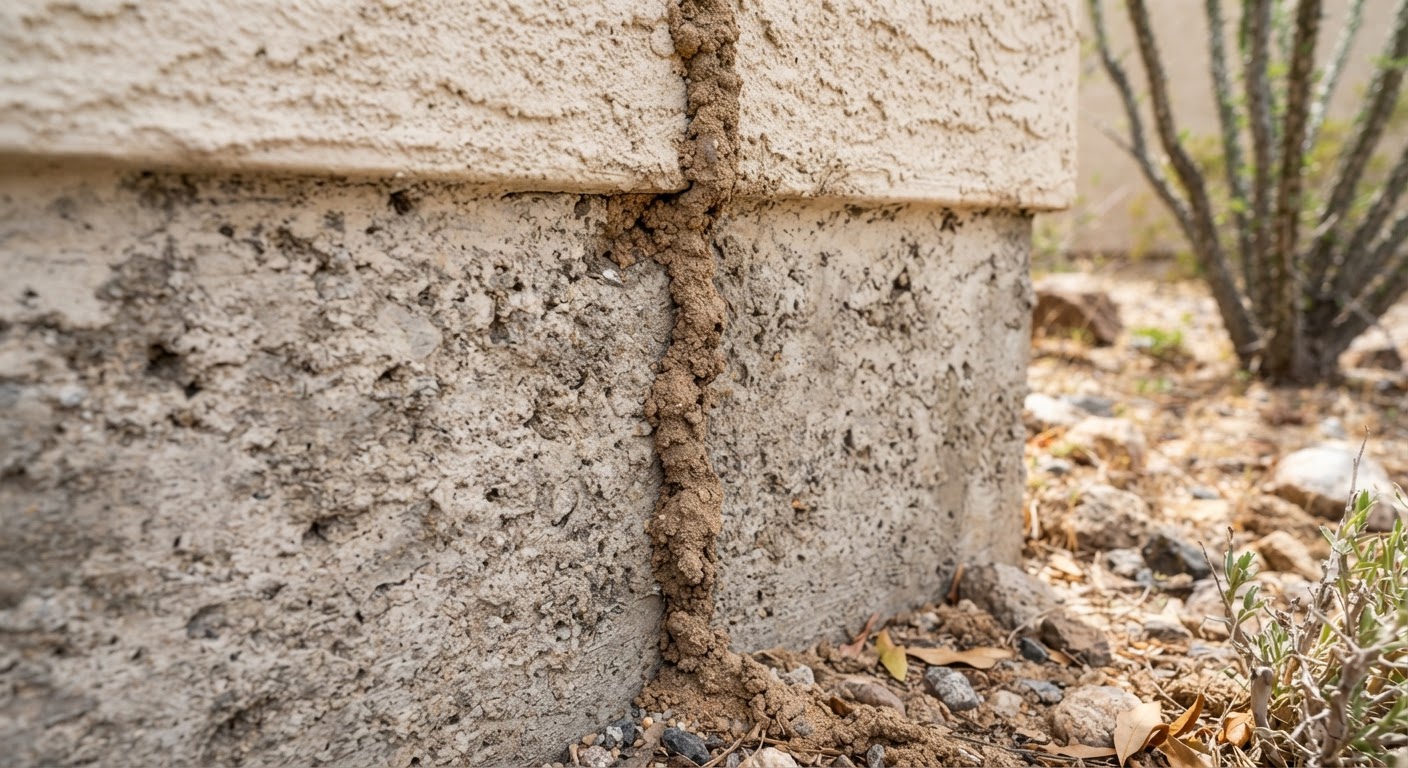
The Hidden Threat of Desert Subterranean Termites
In the arid climate of Avondale and the broader Phoenix West Valley, homeowners often assume that extreme summer heat and dry desert soil naturally deter destructive pests. Unfortunately, the opposite is true for termites. The desert subterranean termite (Heterotermes aureus) is remarkably adapted to high temperatures and dry environments, making it one of the most persistent structural pests in Arizona.
Unlike drywood termites, which live entirely inside wooden elements, subterranean termites nest deep in the soil where moisture levels remain stable. They travel upward into residential structures to consume cellulose—the structural component found in lumber, drywall paper, and wooden trim. Because these pests forage from underneath slabs and behind walls, infestations often remain undetected until significant structural damage has already begun. Recognizing early warning indicators, specifically mud tubes and subtle interior wall changes, is essential to protecting your property.
Understanding Mud Tubes: The Termite Highway
Desert subterranean termites have delicate, soft bodies that quickly desiccate when exposed to the low humidity and blazing sun of the desert. To travel between their underground colonies and above-ground food sources, worker termites construct protective tunnels known as mud tubes or shelter tubes.
Why Termites Build Shelter Tubes
Mud tubes serve three critical functions for a foraging colony:
- Moisture Retention: The tubes seal in humidity, creating a microenvironment that prevents the soft-bodied workers from drying out.
- Protection from Predators: Ants and predatory desert beetles readily attack exposed termites; mud tubes create a secure, covered fortress.
- Darkness: Worker termites are blind and highly sensitive to ambient light, relying on enclosed earthen tunnels to navigate.
Appearance and Texture
Shelter tubes are constructed from a mixture of local soil, saliva, and digested wood particles. In central Arizona, these tubes typically reflect the reddish-tan or sandy color of native desert dirt and caliche. They range in width from the thickness of a narrow pencil to broad, flattened ribbons several inches across. When fresh, the tubes feel slightly damp and firmly packed; older or abandoned tubes dry into brittle, crumbly crusts.
Common Locations to Inspect for Mud Tubes
Desert subterranean termites can enter through gaps as narrow as 1/32 of an inch. When inspecting your home, look closely at structural transition points:
- Concrete Stem Walls and Foundations: Inspect the exposed concrete band around the exterior perimeter of your home, looking for earthen lines climbing toward the stucco or siding.
- Garage Expansion Joints: The expansion seams between poured concrete slabs in garages and carports provide direct access from the soil beneath.
- Plumbing Penetrations: Areas where pipes pierce through the slab—underneath kitchen sinks, bathroom vanities, water heaters, and washing machines—often provide open pathways alongside residual moisture.
- Drywall and Baseboards: Mud tubes can occasionally emerge on interior walls, particularly along corners, behind large furniture, or directly out of baseboards.
Testing Mud Tubes: Active or Inactive?
Finding a mud tube does not automatically mean termites are currently inside that specific tunnel, but it always confirms their presence on the property. Homeowners can perform a simple check by breaking away a small center section of the tube—roughly one-quarter to one-half inch. Leave the ends intact and monitor the break over the next forty-eight hours.
If worker termites rebuild the missing section or if pale, translucent workers emerge shortly after the break, the tunnel is actively in use. However, even if the tube is not rebuilt, the colony may have simply relocated to an adjacent entryway inside the wall. Once mud tubes are discovered, professional inspection is always warranted rather than relying solely on a patch test.
Early Structural and Interior Warning Signs
Mud tubes are not the only evidence desert subterranean termites leave behind. As they consume framing lumber and the paper backing of drywall, subtle irregularities begin to surface on finished interior walls and woodwork.
Drywall Pinholes and Soil Packing
When termites chew through structural studs and reach interior drywall, they feed aggressively on the paper backing. Occasionally, workers accidentally break through the surface paint, creating tiny pinprick holes. Because light and dry air threaten their survival, the termites immediately plug these microscopic openings with small dots of dark soil or mud. If you notice tiny brown specks on a painted wall that do not wash away easily, you may be looking at termite exit or exploration holes.
Blistered or Bubbling Paint
As termites excavate tunnels just beneath the paper facing of sheetrock, moisture from their bodies and building materials transfers into the wall finish. This trapped moisture causes latex paint to bubble, peel, or show uneven rippling along baseboards, door casing, or flat wall sections. Homeowners frequently mistake this for water intrusion or a hidden plumbing leak.
Hollow-Sounding Trim and Baseboards
Subterranean termites consume wood along the grain, preferring softer springwood over denser latewood. They systematically hollow out structural wood from the inside out, leaving a thin outer layer of wood or paint intact to shield them from the room. Tapping baseboards, window sills, or door frames with the handle of a screwdriver should produce a solid sound; a light, hollow, or papery rattle suggests inner galleries have been excavated.
Sagging Trim or Sticking Doors
As internal wood loses its integrity, structural framing and finish carpentry can shift minutely. Doors and windows that suddenly begin sticking, rubbing against frames, or showing gaps in surrounding trim without changes in humidity or foundation settling may indicate framing weakened by termite feeding.
Why Desert Subterranean Termites Target West Valley Properties
Modern homes in Avondale are typically built on monolithic concrete slabs with stucco exteriors. While concrete itself cannot be consumed by termites, construction practices create numerous entryways. Post-tension slabs can develop hairline stress fractures, and stucco finishes often extend too close to or beneath the exterior soil line, allowing termites to tunnel behind the stucco screed completely out of sight.
Furthermore, residential landscaping features frequently attract subterranean colonies. Drip irrigation systems, desert mulch, shade trees planted close to foundations, and air conditioning condensation drains create concentrated pockets of sub-surface moisture that serve as magnets for underground foragers navigating the desert floor.
Taking Action Against Subterranean Termites
Attempting to resolve a subterranean termite issue with over-the-counter surface sprays or aerosol insecticides is almost always counterproductive. Repellent sprays only eliminate the foraging workers visible at the surface, prompting the rest of the underground colony to seal off the damaged tube and find alternative, harder-to-detect routes into your walls.
Long-term protection requires establishing a continuous protective zone around and beneath your foundation using targeted treatments designed to eliminate the colony at its source. Regular visual inspections combined with vigilance around foundation walls will ensure early detection before cosmetic signs turn into expensive framing repairs.
If you have spotted mud tubes climbing your foundation, unusual bubbling on your baseboards, or small soil patches on your drywall, Complete Home Pest Defense provides thorough inspections and tailored termite management solutions throughout Avondale to keep your home protected.
Need help from Complete Home Pest Defense?
Contact our team to discuss your service needs in Avondale and surrounding service areas.